
When proposing a website to a shop, do not stop at finding the manager’s name. Establish who raises the need, who can authorise the expense, who approves the use of the brand and who administers the website. In a small business, one person may hold all these roles. In a network, they may be divided between the shop, its operating company, the central organisation and a service provider.
That distinction changes your opening message. A store manager may notice a problem without being able to commission a fix. A franchisee may run their own company without being free to create a domain using the network’s brand. Equally, a shop displaying a national brand is not necessarily beyond the reach of an independent agency.
Here is a method for a small web agency approaching local shops: a few public checks, a decision matrix, then a question about where to direct the proposal. The aim is not to reconstruct a private organisation chart, but to understand which proposal actually fits. The context discussed here is France; outreach in another country requires checking the relevant rules and contracts.
Start with a specific piece of work, not a job title
Write down what you are proposing in one sentence before looking for a contact. “Selling a website” covers very different decisions: creating an independent presence, improving a location page on a national website, updating contact details or producing photographs the network can use. The relevant person depends on that particular piece of work.
Consider a fictional example. A bakery has a local page on its brand’s website, but nothing explains its services for businesses in the neighbourhood. An agency could propose a separate website. It could also prepare a services page to fit the existing setup. The second option involves different approvals and a different budget. You do not yet know which, if either, meets the shop’s needs.
Describe a limited outcome instead: “help nearby businesses understand the ordering service and how to enquire about it”. Then set out the possible channels without making the choice for the client. That wording leaves room for a solution compatible with their organisation.
If you first need to build a coherent shortlist, the guide to finding clients for a web agency covers that earlier stage. Here, the work begins once you have identified the shop: you are looking for the path a decision follows, not collecting more contact details.
Independent shop, franchisee or branch: keep the status open until verified
The name on the shopfront, the name on the website and the name of the operating company may be different. Start with the official website’s legal information, the location page and public company information. Record what each source actually establishes. A shared brand suggests a network, but does not by itself prove how each store operates.
In an independent shop, the owner may hold several roles. Still ask who looks after the website and who approves spending. A business partner, someone responsible for communications or an existing provider may be involved. The absence of a publicly listed marketing department does not mean there is no process.
For a franchisee, separate running the business from using the network’s tools. The French Franchise Federation describes legally and financially independent businesses. Bpifrance Création recommends examining Internet-related provisions, including a separate website or a page on the network’s website. Sources consulted on 9 November 2026. Legal independence does not demonstrate autonomy over the domain, design, forms or campaigns. The applicable arrangements and approval process need to be confirmed. The French public-service guide to franchising describes shared communication policies among other arrangements: that does not establish the exact process used by each brand. You do not need to receive an entire confidential contract: your contact can have the relevant scope checked internally.
For a branch, do not assume that the local manager has a website budget. They may nevertheless be able to point you towards the relevant team or explain that the issue is already being addressed. Your first useful step may be finding the correct route, without making a sales presentation.
If the status remains unclear, write “organisation to be confirmed”. Asking a neutral question is better than opening a message with an incorrect statement about the shop’s independence.
Use a four-role matrix before preparing a quote
The following matrix is a working tool proposed for your agency, not a mandatory legal template. Complete it for a specific piece of work. The same person may fill several rows; several people may also share one role.
| Role to clarify | Useful question | Confirmation needed |
|---|---|---|
| Person raising the need | Who encounters the problem in everyday work? | A specific use case and desired outcome |
| Buyer or signatory | Who can commission this service and commit its budget? | A confirmed purchasing entity and ordering process |
| Brand approver | Who must approve content or channels using the brand? | The necessary approval steps |
| Technical lead | Who can authorise changes to the website or domain? | An authorised contact and an agreed way of coordinating |
Add three columns to your copy: confirmed information, remaining question and next action. Avoid turning a guess into a contact name. “Network team suggested by the shop, role to be confirmed” is more useful than “decision-maker identified” without evidence.
This framework prevents two common misunderstandings. The person who replies to you is not automatically the person who commissions the work. The person who can edit the website does not necessarily have authority to fund a new service. An external webmaster may carry out a request approved elsewhere; a director may authorise spending without holding the technical access.
Do not try to fill every box before the first conversation. For an initial enquiry, knowing the possible need and the appropriate business channel is often enough. However, before pricing a migration or promising a delivery date, the approval dependencies need to be explicit. Otherwise, you risk selling work whose conditions of delivery remain unknown.
Keep public checks brief and traceable
First open the website the shop identifies as its official one. Read its local page and legal information. Then, where available, look at the brand’s directory of locations. You are seeking a verifiable connection between the store and the channel concerned, not personal information about its team.
Keep a short record: shop name, URL viewed, reading date, potential need and the decision process still to establish. A statement such as “the local page is hosted on the brand’s domain” describes a visible fact. “Head office bans all external providers” would be an unjustified conclusion without confirmation.
A Google listing, directory or search tool can provide a starting point. Cross-check the contact information and identity against an official source before using them as the basis of a message. A missing link is not enough to conclude that the shop has no website, and an old page does not prove that its provider has disappeared.
Stop researching when the next question concerns internal organisation. Digging through private profiles or guessing email addresses will not resolve a contractual uncertainty. Use the business channel published for this kind of enquiry, without sending a fake customer message to get around reception.
The SprintLead page for agencies presents the product’s approach for this audience. A list of businesses helps organise the starting point; it does not replace confirmation of decision-making authority. Do not ask a score or an enrichment field to certify permission that only the shop or its network can explain.
Ask a routing question that is easy to answer
Your opening message should let the recipient respond without having to defend their organisation. Avoid “Who is the real decision-maker?”, which devalues the person you have contacted. Explain the proposed work, then simply ask which route is appropriate.
Here is a fictional example for an appropriate business channel:
Hello, I’m looking for the right contact for a proposal about presenting your location’s services on its local page. Is this managed at the shop or by your network? If it is centralised, could you point me towards the relevant team? I’m also happy to leave it there if the subject is not relevant.
Adapt the subject to a genuine observation. Do not use this example to imply that you have investigated a need you have not verified. A routing question does not authorise a succession of identical messages to every shop carrying the brand, either.
If your contact directs you to a team, describe that referral without inventing a recommendation. “Your store told me this subject sits with your team” is not the same as “your local team wants to work with us”. Also respect a negative answer or a request to stop; do not look for another employee to get around that refusal.
At this stage, request neither a password nor administrator access nor an internal document. The aim is to establish whether a commercial discussion is appropriate. Access arrangements and delivery conditions come later, as part of an explicitly agreed engagement.

Stock illustration, not a real client engagement.
Three fictional cases: adapt the proposal to the process you discover
First case: an independent shop with an existing provider. The owner wants to present a service more clearly, but their usual agency administers the website. Your proposal could cover content or a specification rather than a complete takeover. Ask who approves the copy and who adds the page. If the existing provider already covers the need, acknowledge that. You do not need to create a conflict to win a project.
Second case: a franchisee with a page on the national website. The shop can fund certain local activities, but website content goes through the network. Prepare a conditional proposal: collect information, write a page, then submit it through the authorised process. Do not promise publication that you do not control. The quote should separate your deliverable from integration performed by a third party and identify the approvals required.
Third case: a branch whose website is fully centralised. The local manager confirms that all website services are handled by head office. There are two reasonable outcomes: offer the indicated team a contribution compatible with its needs, or remove the account from this campaign. Do not automatically send the same proposal to twenty branches to increase your chances. Repetition mainly creates several conversations about what remains a single decision.
These situations are illustrations, not results achieved with clients. Their common lesson is straightforward: changing the scope can be more useful than trying harder to persuade. You may be well placed to make a specific contribution and poorly placed to replace the entire setup. Recognising that distinction also protects your preparation time.
Before quoting, clarify dependencies without demanding all the access
Once interest is confirmed, summarise the decision process in writing. Specify the purchasing entity, the deliverable, the necessary approvals and the person coordinating them. Ask the client to correct your understanding before producing a detailed proposal.
For a page to be integrated into a network’s website, check the expected format, editorial constraints and who performs the integration. For a separate domain, first ask whether creating it is permitted within the proposed scope. For a technical change, establish who can authorise it and how the work will be controlled. None of these points requires anyone to send you a secret immediately.
Include dependencies in your estimate too: content supplied by the shop, brand approval, a provider’s availability and any acceptance testing. A date dependent on a third party should be described as such, not as guaranteed delivery. If an essential approval is missing, you could offer a separate scoping phase with clear value even if the subsequent work is not commissioned.
The guide to checking a new B2B client before the first quote complements this work on identifying the business and making preliminary checks. The roles matrix replaces neither those checks nor examination of the applicable contractual provisions. It helps you ask the right questions before committing production time.
Choose the next action, then stop unnecessary research
Finish each record with one concrete action. If the need and process are confirmed, prepare the limited proposal you discussed. If the need seems relevant but the buyer remains unknown, ask for direction. If the subject is centralised and no further conversation is wanted, end this approach. An unknown does not justify a more persistent campaign.
To track your work, count the records whose decision process has been clarified, those redirected and those set aside with a reason. These are indicators of your process, not an automatic measure of sales performance. Setting an account aside can be a good decision if the work is not permitted or the need does not exist.
When a network appears several times in a list, group the locations to avoid competing approaches. Preserve confirmed differences, however: some locations may have a different organisation. Do not generalise one shop’s answer to the entire network without checking.
The final record should be readable in a minute: proposed work, public facts, four roles, remaining uncertainty and next action. Any detail that serves none of those headings can probably be removed. You gain a more precise basis for a conversation, without collecting unnecessary data or confusing prospect research with investigating individuals.
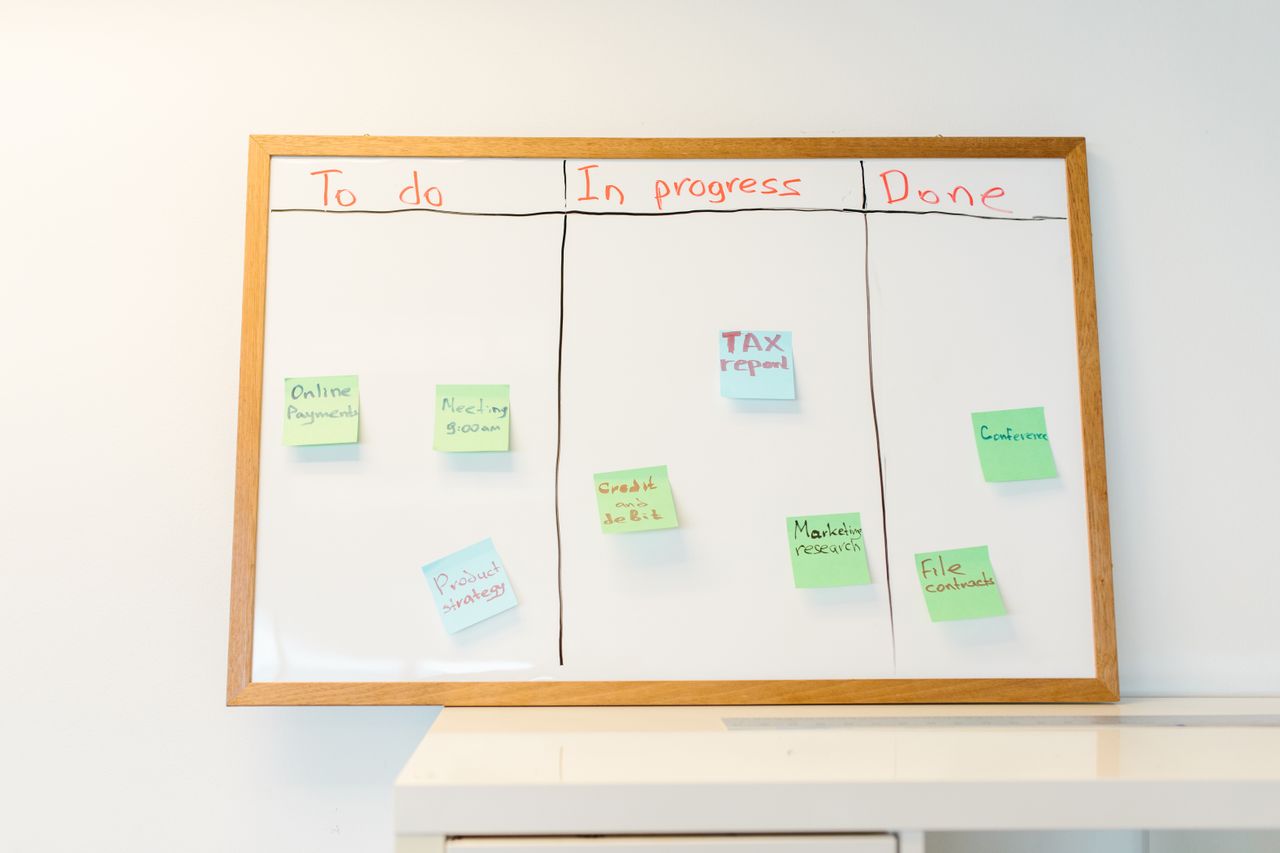
Stock illustration, not a real client engagement.
Frequently asked questions
- Is the store manager always the right contact?
They may be able to explain the need and direct your enquiry without controlling the budget or brand approval. Ask which process applies to the proposed work rather than assuming they have authority to commission it.
- Should you exclude every franchise from web agency outreach?
No, but you need to confirm what work is possible. Some projects may sit with the shop, others with the network or an approved provider. Legal independence alone does not establish freedom over web channels.
- What if nobody confirms who can approve the project?
Do not prepare a firm proposal that depends on that approval. Summarise the unresolved question, ask for direction through the appropriate business channel, then pause the approach if the process remains unclear or the contact does not wish to continue.
On your next list of shops, replace the “decision-maker” column with four roles: need, purchasing, brand and technical responsibility. Information you cannot find remains a question, not a conclusion. Then ask your contact which process applies to the proposed work. You can prepare a precise quote, suggest a smaller contribution or set a prospect aside appropriately. The right contact is not necessarily the most senior person: it is the person who helps you move forward with those who genuinely have the necessary authority.